Friday, October 11, 2019

Worldwide Photo Walk 2019

Last Saturday, for the second year in a row, M and I participated in Scott Kelby’s Worldwide Photo Walk. This time we were the leaders! We learned plenty from our walk leader last year in Tübingen, and almost right away we started planning for our 2019 walk in Esslingen.


Click here to learn more about Scott Kelby’s annual Worldwide Photo Walk.
This is my description of our walk last year in Tübingen.


We were a small but international group – really the perfect size, if you ask me. Although up to 50 can register for a walk through the website, I think that would be too many people for me. The photographers don’t have to stick together or even necessarily follow the route planned by the walk leader, and it's fine if walkers have their own plan and wander off. The thing I really like about having a more manageable size group, though, is that we can get to know each other much better! Most stayed for dinner afterwards in a restaurant near the beginning and end of our walk, and that gave us extra time to chat, compare notes, and exchange contact info.


We are originally from Germany, Romania, Syria, and the U.S., ten in total. The equipment people brought came from Sony, Nikon, and Canon, and two used their smart phones. Everyone had different ideas of what to photograph, and M and I just basically led them through some of Esslingen’s pretty bits. Those of us with less experience watched the others and got ideas from what they were shooting. And yet we were spread out often enough that we didn’t always know what the others had in their view finders. It is fun to see the others’ photos and creativity, and I especially like it when I’m looking at a photo afterwards and think, “Very nice! I would not have thought to take that!”


photo credit: Dominik Thewes
Website
We had planned our walk from 15:30 to 17:30, but knowing how things would likely go, I reserved our table for dinner at 18:00. Good thing, because we only arrived at the restaurant at 18:10! You can’t rush photographers, nor would you want to.
photo credit: Dominik Thewes
Website
The sky was drab and dull, but despite the clouds it didn't rain that afternoon. Solid blue sky and bright sun isn't actually the best for afternoon photography, but a little mix and interesting cloud formations would have been nice rather than basically solid grey. Maybe I can arrange that for next year...

The quote of the day came from one of the guys, who’d set up what he thought would be a great shot. Frowning at his display after the picture, “Well, that’s not what I was going for. But I’m hungry.” We were at the Hafenmarkt at that point, and I asked them if they still wanted to see the oldest continuous row of half-timbered houses in all of Germany (ca. 1331) or rather go right to dinner. Like the dedicated photographers they are, they set their hunger aside and went for the houses. And then they found the back side of the altes Rathaus, a statue, a shop window, more Fachwerk


That is my favorite candid shot of most of the hungry group. Hungry, but, “Wait! This could be a good shot!

What could be better in today’s world? A worldwide peaceful activity that promotes creativity and passion for photography. An opportunity to spend a few hours with other creative minds and folks who want to exchange ideas and learn more about framing, exposure, optimal camera settings for various conditions, and photo editing. Before last year’s walk I only shot in jpeg and used a basic program to do very simple editing – rarely anything beyond cropping and fixing red eyes. After the walk I finally got interested in Lightroom® and semi-serious photo editing. I still have much to learn, but M gives me tips ("Ease up on those sliders!") and I’ve been watching instructional videos when time allows.


photo credit: Dominik Thewes
Website
It wasn't all serious photography! We fooled around a bit, too. I didn't know Dominik was taking the above shot, but later he returned the favor!


I must admit, though I hope someday to capture some creative "Wow!" photos as the other photo walkers with more experience did, my favorites from my memory card are the candid people shots of our group members. 
Ein Selfie muss doch sein!
Photo credit: Hasan Hesso
After last year’s walk I wondered if my childlike enthusiasm would fade, and the WWPW would be one of those “Oh, that was fun once, but we’re busy, it’s a Saturday (the only day when we can get serious yard work done), and what if the group isn’t as fun and interesting as last year…?” But it never faded at all during the year! I’d noted in my calendar when the walks would be open for registration, and I submitted my leader form at the first possible moment. Then I checked my email ridiculously often for confirmation, which came just a day or so later. I contacted last year’s photo walkers so they knew about our walk in Esslingen, and one of them signed up! I also let a few area friends know, and two of them joined us. It was definitely worth the time, and our gang was just as fun, interesting, and eclectic as last year's group.


Leading the walk has been little extra work. The location (Esslingen’s Altstadt) was obvious, and we knew roughly which areas we wanted to highlight for our photo walkers. The hardest part was deciding what to cut out (Stadtkirche, Zwiebelbrunnen, Burg) for lack of time! We’ll surely do another one next year and will include other parts of the Altstadt, perhaps starting up at the Burg.


Sammelplatz!
(Assembly area)
Next year’s walk will be on Saturday, 3 October – which in Germany is a holiday! It's always on the first Saturday in October. Wherever in the world you are, if you are interested in photography or just enjoy taking pictures and meeting people, mark your calendar! The walk registration starts near the end of August, and all you need to do is google “Kelby Worldwide Photo Walk” to start searching for one near you. And remember, if there isn't one close enough to you, check back often and/or apply to be a leader! It is not difficult (contact me if you want some tips from a first-time leader)!


I'll leave you with some of the other walkers' images of Esslingen.


Photo credit: M
photo credit: Dominik Thewes
Website
Photo credit: Jim Martin
Blog

Photo credit: M
Photo credit: M
Photo credit: Hasan Hesso


Photo credit: Hasan Hesso
Photo credit: Mohammad A Khawandah


Thursday, October 3, 2019

Life Lately October 2019


Although I haven’t blogged in what feels like ages, I have some ideas brewing. I’d like to say the reason I haven’t been blogging is because I’ve been spending every spare minute studying for my Jägerprüfung (hunter’s test), which I’ll take in May, but that wouldn’t exactly be the truth. I am certainly studying often, but my intentions are better than reality. Still, I have made progress. Ask me about Jagdoptik. Go on, ask me!

I thought I would put up a short report about what’s been going on around here since my last post.


TRAVELS

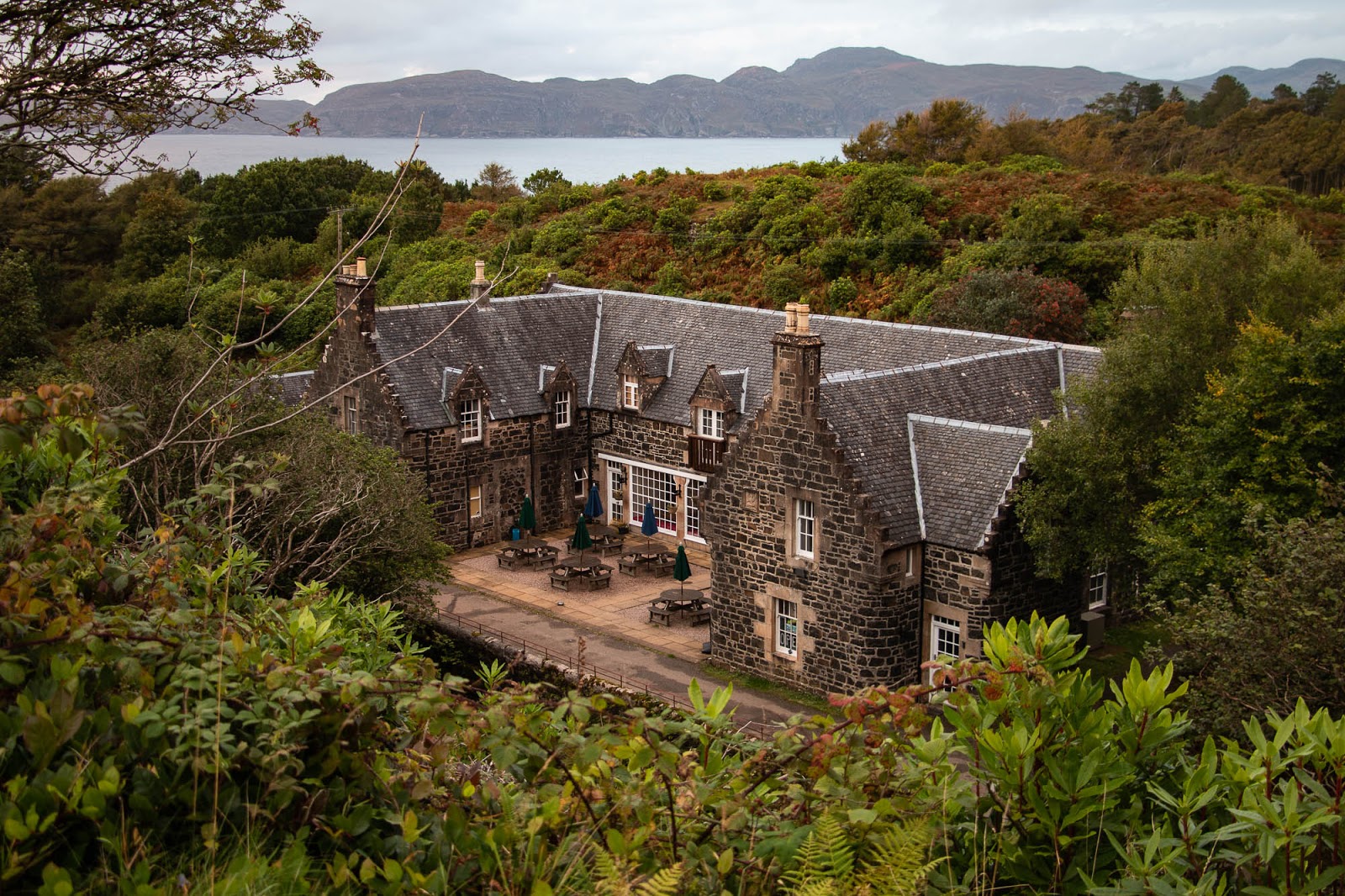
M and I spent two wonderful weeks at Glengorm on the Isle of Mull in Scotland in early September. Took some new walks and some old ones, booked a wildlife boat tour, spent time in the nature hide watching wildlife, spotted eagles, buzzards, and even some red deer, spent a few hours with a falconer, had fish-n-chips, visited the Great Polish Map of Scotland, cooked with Glengorm beef and lamb, and I (with M’s help) finally learned the difference between a Fichte and a Tanne. I also now know the Hasel, the Buche, and that “gemeine Buche” doesn’t mean “mean beech,” but rather “common beech.”


READING

Goodreads must think I’ve died. I haven’t finished more than a handful of books, and I have several (possibly 8) unfinished ones lying around. I’ve lacked the commitment in part due to the Jagdkurs. I feel guilty reading anything but my hunting books and magazines, but I’m hoping to finish one or two books for pleasure before the end of the year!

TEACHING


I’ve started a new class once a week (Tuesday evenings) with a colleague, teaching adults who have difficulty reading and writing. It is not just for foreigners; there are plenty of Germans who struggle with this as well. The class is called “Deutsch Spezial” and it’s open to anyone.


I also have my private student from the Philippines who comes for German lessons two hours a week, an acquaintance whom I’m helping with conversational English, and the now-less-than-weekly English conversation lessons with M’s employees.


The other day when I was having coffee with a friend and doing some English for his business English class, a woman overheard us and asked if I give Nachhilfe (tutoring) in English. I don’t really, but perhaps I can give it a try. Her daughter needs a boost with her 8th grade English class. It remains to be seen if I can help with 8th grade English here in Germany – I never taught anything like that in the US, despite teaching English for 16 years. Weird, huh? Language classes here are challenging, especially with regard to grammar. I'll need to be able to help her with present conditional, present continuous, gerunds, past perfect, future perfect, passive voice, etc. and under what circumstances those constructions are used. What do American kids in 8th grade learn in English class? That spelling and grammar don't matter - it's your thoughts that count.

EATING


We had our last portion of homemade Hirschgulasch last night. Good timing, since it’s now high hunting season and we’re getting to know more local hunters. J


We also reserved for “Ihabs Arabische Küche” at our favorite restaurant and had falafel, Guzi (a lamb dish) and veal steak with a delicious sauce and bulgur. Martin S. admitted the dishes had to be a little “eingedeutscht”, at times to Ihab’s dismay. Ihab is his Azubi (apprentice) from Iraq. I learned from him that Arabic food is not necessarily very spicy, but rather herbal (würzig) and full-flavored. That may explain why many Syrians I know don’t like German food: It’s bland in comparison. 


DRINKING

Well, M came home for lunch yesterday and announced, “I think we should participate in ‘Sober October’.” Say no more, I’m all in! Except that having a Gläschen Wein in the evening is my second favorite thing. That evening I had apple tea with honey. It was not satisfying.

WATCHING

M drove us to the Naturpark Schönbuch so we could take a walk through the woods and experience (from a distance!) the Hirschbrunft, or red deer rut. I wish I had known how to make a video with my smartphone, because that was really something! It's one thing to listen and watch on TV or YouTube, and quite another to be standing meters away from these bellowing beasts.


VISITING

M and I were invited to the home of a local hunter for Kaffee und Kuchen, and we spent three hours there chatting with him and his wife (also a hunter) about my upcoming test, hunting in general, and falconry. He took us in his Landrover through his huge Revier, in which he organizes a Treibjagd (group hunt) every December. We both said we’re interested in participating, either as Treiber (who walk unarmed through the forest to flush out wild game) or as photographers. At the Jagdschule they worked hard to advise us against ever participating in a Treibjagd, but at the same time I’m expected to know details about it to pass my test. This hunter has also said I’m welcome to accompany him out when he goes to one of his Hochsitze during the coming months.


That's the most of what we've been getting up to in the last little while. Here's what's coming up...

UPCOMING

Scott Kelby's World Wide Photo Walk:  This Saturday afternoon in Esslingen!

Celebrating* M's birthday: Dry, because it's in October. 
*We don't actually *celebrate* our birthdays. We go out or cook a nice dinner, have a toast, and otherwise spend the evening like every other. That's how we like it!

Trip to Breisach am Rhein: On the weekend of my birthday to visit extended family.

Treibjagd: 1st Saturday in December


What about you?!?


Monday, August 19, 2019

Jagdschule Report 3

I have completed the Jagdkurs (hunting class). In total, not including lunch breaks, we were in class and at the shooting range for about 174 hours, several days in this last week running for 12 hours (8:00am to 8:00pm). During the first two weeks in June and July we were 14 or 15 students, and in the last week we were about 30 because two classes combined. My classmates will be taking their test in just two weeks! Since M and I will be in Scotland then (a vacation planned before I'd signed up for the class) and because I need lots more study time to be ready, I will be taking my test in May.

The test has 3 parts (multiple-choice, oral & practical, and shooting) and is administered over 3 days.

Damschmalspießer
Wildpark Allensbach
As I reflect on these past three months I can't help but be pleased by the changes in myself and the things I have learned. I do not mean this in a bragging way, so forgive me if it sounds like that. And in case you're new to my blog, I can tell you I do not ever plan to hunt. This is the first step to becoming a Falknerin (falconer) in Germany, and that is my goal.

I have a whole new vocabulary that I would never have acquired had I not started this journey. Much of it is not useful beyond the world of hunting and Falknerei, but if you know me, you know I love learning. I've learned new dog breeds - and some breeds I knew already but now I know them in German, too. I've also learned about the skills of various breeds - Apportieren (retrieval), Vorstehen (pointing), Buschieren (flushing), and Brackieren (??) - and qualities that are desired, such as spurlaut, Wildschärfe, Führigkeit, and those that are not - waidlaut, schussscheu, and Knautschen.

kleiner Münsterländer
demonstrating Apportieren without Knautschen
At the start of this class I would not have confidently been able to tell the difference between a Rehbock (roe buck) and a Rothirsch (red deer stag). A deer is a deer, right? Nope. There's also Sika and Damwild around here - two other types of deer - and I still have trouble identifying the calves, fawns, and yearlings.

Interestingly I have also started losing my English - I just had to look up "Kitz" to come up with the English word "fawn." That happened more and more frequently during the course.

I can now also tell you how many teeth a fox and a Marderhund have (hint: it's also the answer to "life, the universe, and everything") and why a red deer has two more teeth than a roe deer. I can explain the difference between a deutscher Stecher and a französischer Stecher (hair trigger), give you seven different words for "tail," and list 15 different Vorstehhunde (pointers), 3 Schweißhunde (bloodhounds), and 6 Bracken (hounds) that are commonly used for hunting in Germany. I can identify Gerste and Buchweizen in jars and Gerste and Weizen in the field. 


The biggest change in myself is that I am no longer terrified of guns. Other people with a gun in their hand still freak me out, but the guns themselves are not scary. In no way am I implying I now understand the American mindset of "I need a gun to protect myself" business. I have a healthy respect for guns just like I have a healthy respect for large wild animals and sharp knives. But having learned how to safely handle several long guns and handguns, I see them as I see sharp knives. If you're careful and use your damn head, you can usually avoid major injuries or death.

großer Münsterländer
learning not to knautsch (bite into the animal he's retrieving)
However, I also now know how bloody difficult it is to aim and shoot a gun accurately. Apparently handguns are even harder to aim accurately than long guns. So the whole "we need more good guys with guns" is still horseshit to me. When I shot the four different guns I was required to shoot, right up to the last day it felt pretty random to me whether I hit the targets or not. I had eventually learned how to aim at a moving target with the rifle and the shotgun, but on my second last go at the wild boar I shot four 9s and a 10, and at my next round I shot three zeros, a 9 and a 5. I had as much time as needed between shots to take a deep breath and lower my heart rate. I was calm, there was nothing to be nervous about, and whether I hit the target or not didn't really matter. There were still plenty of times when I did not hit the thing I was aiming at.

Rotwild Alttier
red deer hind
I made some friends during the course (my classmates ranged in age from 15 to 67 and included in the last week six other women), and everyone was really helpful when I didn't understand something and had to ask for clarification on a word or concept. I appreciated their patience, and some of them told me they were glad they weren't doing this in a foreign language. We shared some frustrations with the way things ran during class some days, carpooled to and from the Schießstand (shooting range), and had meals together when there was time.


This is one of my classmates. On one of the test days,
we have to demonstrate that we can handle a long gun safely
while climbing up into a Hochsitz, load it, aim after confirming
the shot is safe to take, unload and climb down again.
Besides all the shooting, the other previously-unfathomable experiences I have had during the last three months include: watching Aufbrechen ("field dressing") six times, holding the still-warm heart of a Rehbock in my hand, handling and identifying several other vital organs of a Reh and a Wildschwein, sitting with a hunter in his Hochsitz for just 10 minutes after which he shot a Rehbock, sitting with my classmate and friend Katharina in a Hochsitz for 90 minutes and seeing nothing but a few pigeons, stabbing an already-dead Reh (she'd been hit by a car and then "field dressed") with a bowie knife to practice the technique because a hunter here will be called after a traffic accident involving Wild and might have to finish it off if it's not quite dead yet - and if it's lying on the pavement s/he can't shoot it because there is no sicherer Kugelfang (the bullet could ricochet), and failing no less than six times so far to understand why one aims a shot a few centimeters low on the target with the Zielfernrohr (scope) when shooting UPwards in the mountains.


Deutscher Wachtel
I'm reading hunting magazines instead of novels when I take the train somewhere these days, I'm watching every documentary about the wilderness and wild animals I can find on TV in the evenings, and practicing safe weapons handling and my Anschlag (shooting stance) often with one of M's Luftgewehre or the Hantelstange, which lies permanently on the living room floor. And I am practicing statements like this, which I have to say during the weapons handling part of the test as I simulate a situation in which I would be aiming my gun at an animal:


"Vorder- und Hintergelände sind frei,
ein sicherer Kugelfang ist vorhanden,
das Stück steht breit.
Ich entsichere die Waffe,
ich steche die Waffe ein,
ich bewege mein Finger zum Abzug
und löse den Schuss aus."

The words in red are ones I'd never heard or used in my life before this. I can't even translate "einstechen" because I don't think guns used in the US have this feature.


This is me aiming at the laufenden Keiler
(running boar) with a Blaser R8.
All of these are things I was sure I would never do in my life. "Never say never," they say.

The journey continues as I spend the next eight-and-a-half months re-reading, re-learning, and reviewing the life cycles and antler/horn development of Boviden and Cerviden, learning to identify important trees, bushes, and crops as well as the inner organs of boars and deer and whether those organs are normal or diseased, gun and hunting laws in Germany, and at some point get back to a Schießstand so I can refresh my shootin' skills.

I wish my classmates success (Waidmannsheil!!) and hope to hear good news from them all in our WhatsApp group in a few weeks!


For further reading:
  Jagdschule Report 1
  Jagdschule Report 2


Sunday, August 11, 2019

Scott Kelby's Worldwide Photo Walk 2019

link here

This will be an uncharacteristically short post announcing the 2019 Worldwide Photo Walk organized by photographer Scott Kelby and his team. M and I participated last year for the first time in Tübingen, and we really enjoyed it!

The walk we are organizing will be in Esslingen, Germany. Here's the link to the description. Join us if you're in the area! And sign up on Kelby's site - it's limited to 50 people (yikes!). Last year there were more than 900 registered walks around the world and about 17,500 walker-photographers!

You do not need to be a professional photographer or even a really, really good one. Nor do you have to have the best and most expensive photography equipment. Your smartphone or point-and-shoot will do.
You just need to...

  1. enjoy photography, or
  2. like getting together with people, or
  3. enjoy a nice casual walk around town, or
  4. want someone to show you the picturesque spots in town, or
  5. be up for something new!

No matter where you are in the world, you can search Kelby's site and find a walk near you, perhaps right in your own city or town. Check back frequently, because new walks are added every day. If you don't find one, apply to lead a walk yourself! If you do apply, one tip: The team is probably more interested in your ability to lead a group safely around town than your photographic expertise. It helps to be good at both, of course - that's what makes M and me a good team!

What I like about this activity is that it truly is worldwide, it is peaceful, and it promotes creativity. Oh, and it costs NOTHING!!

I'm off to my final week at the Jagdschule, which is why this post is short. Then again, it doesn't need to be longer.

Do the Photo Walk!! Why not?!?


Monday, July 8, 2019

Jagdschule Report 2

Where shall I begin?

I came into the second week of hunting class with a better idea of what to expect, and I felt prepared. For this week I'd rented an AirBnB flat in Eigeltingen, and it was perfect!! It had a refrigerator for my wine and cheese, a balconey for watching the sunsets, a little kitchen, and plenty of space to spread out. I truly wish I had booked this for the final week as well.


We were scheduled right away on Monday to be back on the Schießstand (shooting range), but two drivers had provided the school with roadkill, so we had a go at Aufbrechen ("field dressing," as it's so ambiguously expressed in English). The accident victims were two Rehböcke (male roe deer). Ludger, our teacher, demonstrated on the first one how to do what needed doing and how to identify the various organs, and for the second one three of us students took hand to knife. I was bracing to be grossed out, but it was not bad. On the contrary it was quite interesting, and I wish I had stepped up as one of the volunteers.

But because we did not go to the Schießstand on Monday, that meant every other day we'd be shooting - Tuesday through Saturday.

The classroom work covered Haarwild (furry game), Jagdrecht (hunting laws), and Waffenrecht (gun laws). After my experience the first week feeling like there was too much I didn't understand, I was surprised to find that it's getting easier language-wise. The man who sits next to me is very helpful when there's a word I don't hear properly or understand (Danke Hans-Martin!!), and I'm getting braver about raising my hand when I have a question or need something explained.

So the main drama of the week for me involved the shooting. I approached it with at least less fear than in the first week, in part because I had an idea what to expect: I knew already the gun is heavy, I knew I'd have to shoot at Tontauben (clay pigeons), and I knew I probably wouldn't hit any unless I got lucky. Remember, I'm a realist, not a dreamer.

What the hell am I doing?
What I wasn't prepared for were the bruises and the pain. Although Tontaubenschießen is not part of the test, we had to shoot at 120 of them. I had some instruction on how I should stand and "aim" on the first day, but after that I just had to shoot. After everyone else was finished with the pigeons, I had another round of 15 to go. One of my young classmates offered to shoot with me and give me some tips, which I gladly accepted! He even told me if there's something I don't understand, he'll try to explain in English. (Falls du dies irgendwann liest, danke vielmals Jannick!")
Hauptsache: Bring es hinter mir!  Shy of my last two shots, I had to quit because I couldn't take the recoil anymore.

ouch.
I don't even remember anymore the order in which we shot at everything else: The Kipphasen (running tip-rabbits) with the Flinte from about 35 m,  the stationary Rehbock (roe deer) with the Büchse from 100m away (sitting, resting the front stock of the gun on a wooden ledge, with a sight), and the Keiler (running wild boar) with the Büchse from 50-60 meters.

I love the Rehbock and hit it with a shot that counts for the test all 21 times I shot at it. The recoil of the Büchse is not nearly as bad as with the Flinte. The Keiler was also ok once I got the hang of it, and I got good enough scores to count as "pass" for the future test.

But those damn Kipphasen.

On Tuesday I was in a group of 6 students, and the five guys went first, one at a time. They saw various degrees of success, but all looked pretty natural and confident. Then it was my turn. The Schießtrainer, Mike, took one look at my face and said to the guys, "Hey Jungs, macht mal eine Kaffeepause." ("Go take a coffee break") That was fabulous! My classmates don't do anything wrong, but I feel pressure to hurry up, knowing they're waiting for their next turn. I felt much better doing this alone with Mike so I could ask my stupid questions and focus better. Still, my aim was too high. Every. Bloody. Time. By chance I think I did hit two of them (out of 20).

Later, when it was my first turn at the Keiler with Ludger as the trainer, one of the thoughtful lads asked, "Should we leave?" "Das wäre nett, danke!" Ludger asked what was going on, and I just said I can concentrate better.

I'm going to skip to the end of the week. Saturday was our last day of class and shooting. Both the Rehbock and the Keiler were going well enough. I no longer needed my classmates to leave, in part because we were now in smaller groups - just four. At the Kipphasen finally, after seemingly ages, I asked enough questions and something clicked with me. In my final round I missed the first two but hit the last eight of the little bastards. I'd finally got my head/eye low enough over the Schienenlauf (top of the barrel) and was able to hold the gun steady enough. Whether I'll be able to hit them again when we're back at the Schießstand in five weeks, we'll just have to see. But at least the week ended on a good note!

Relieved to be back home on Saturday evening, I grumbled to M that the gun (the Flinte, mainly) is too heavy. He disappeared into the basement and came back with a Hantelstange (the bar from bench press weights). "Train with this!" It's heavier and longer than the guns I have to use, but it should be closer to what I actually have to do at the Schießstand than the "zwei Kisten Bier" Ludger told me to lift repeatedly every day.

That thing weighs 8,5 kg (18.7 lb)!
The Flinte/Büchse are closer to 3-4 kg
Believe it or not, I am no longer dreading the shooting! I still have a long way to go with the Waffenhandhabung - safe weapons handling - before I'll be able to pass that part of the test (and if a student fails that, s/he's just done - s/he doesn't get to shoot). In that part we are expected to be familiar with Langwaffen and Kurzwaffen, and demonstrate safe handling based on the situation described to us by the Testprüfer (test officials), narrating our actions before or while we carry them out.

For now it's back to the books, notes, and training videos, household chores and Gartenarbeit, Privatunterricht (I'm giving private language lessons 3 times a week) and wonderful Nachmittagsnickerchen (afternoon catnaps).


Waidmannsheil!!

Other blog posts that might be of interest: