Showing posts with label tradition. Show all posts

Tuesday, October 25, 2022

Shop Local: Poultry Farm Shop

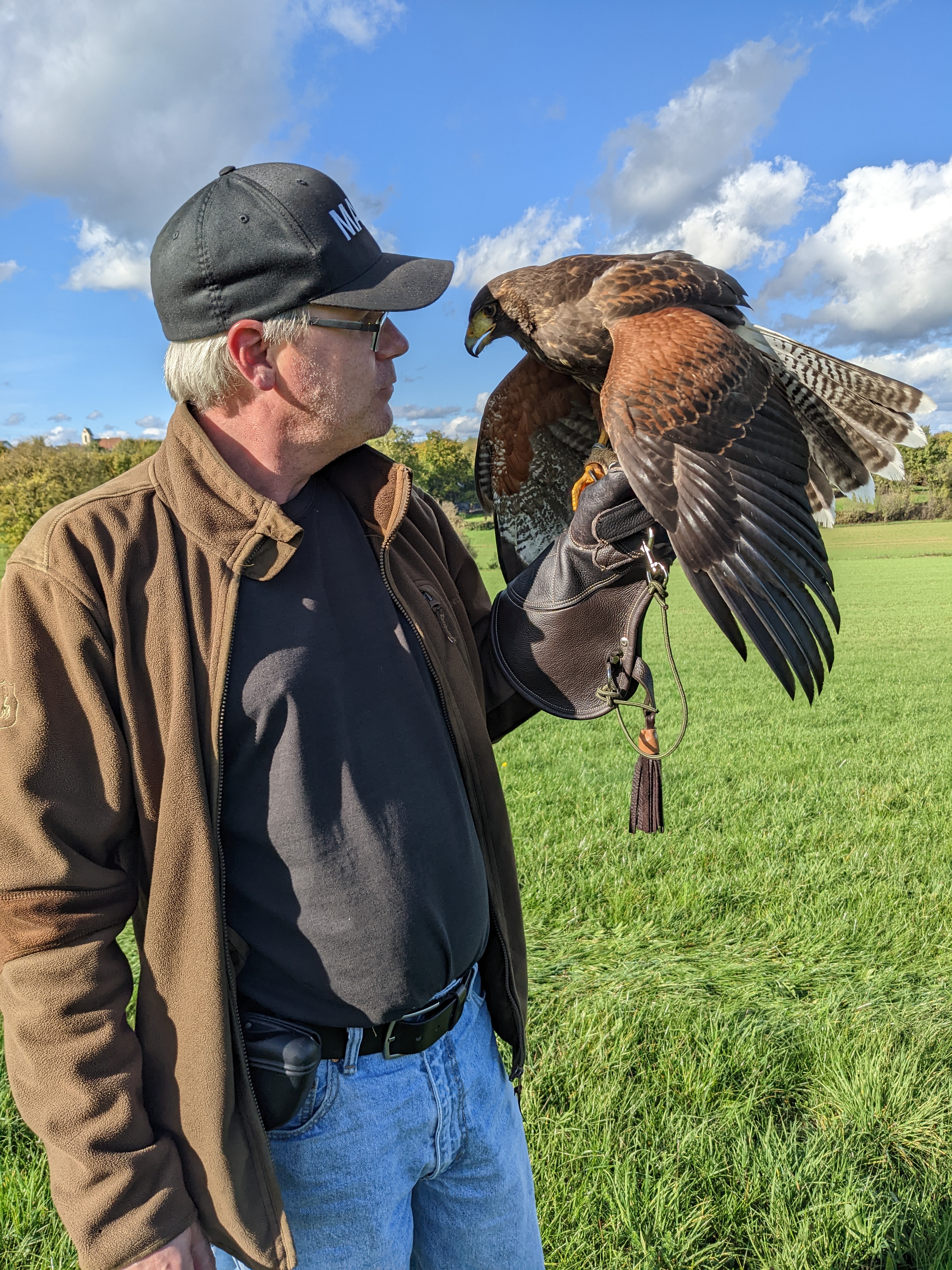
This blog post combines two of my favorite things: Falconry and shopping in local farm shops!

It's perhaps not a post for vegetarians, but Kaya is not one of those and neither are we.

Our mentor showed me this farm shop in Neustetten, a tiny town about 18 km / 20 minutes from home. The big grocery store is just four minutes away by car. Is the drive worth it, with gas prices so high? 

ABSOLUTELY!!  (especially with our electric car...)


This is the shop connected to a chicken farm, and our mentor told us they slaughter on Mondays, which means on Tuesdays they have fresh chicken and chicken parts for sale. So whenever we're running low on tidbits for Kaya's training, I make a drive here on Tuesday morning. I buy two packs of Hühnermägen (chicken stomachs) and today I also picked up Hühnerherzen (chicken hearts).

Gross, you think? I beg your pardon! This is Swabia, where generations ago many people were poor. Nothing - or very little - from the animal, be it cow, pig or chicken, was wasted, and Innereien (offal, giblets) were turned into delicacies that are still enjoyed today. Ok, not by me, but when I told my Schwiegermutter what I'd bought this morning, she did not know if it was for Kaya or for us. A family friend has cooked Hühnermägen and according to her, M liked them when he was younger!

In fact I plan to get there within an hour of the shop opening, because I want to make sure they're not sold out of the giblets. Because the demand is perhaps not SO high, these bits are also not expensive. From one package I can get portions for 12 training sessions, and it only costs €2,50.

Hühnermägen rinsed and ready to be cut up for tidbits.
It's just meat, really.

This shop is not just about chickens. They sell fruits, vegetables, spices, fresh herbs, plants, flour, oil, canned and jarred goods, nuts, noodles, and today I saw traditional German Christmas treats like Zimtsterne, Lebkuchen and Schoko-Vanillekipferl


Later I spent half an hour cutting one package of Hühnermägen into tidbit pieces for training, and when we trained Kaya this afternoon she had fresh (not frozen-thawed) tidbits, which she must have enjoyed even more than usual.

At the end of training; she's still manteling
to let M know she'd happily take some more.

These local farm shops are one of the many reasons I love living where we do - basically out in the countryside. We will keep doing what we can to support these shops even though they're not as convenient as the big stores where all the goods arrive on delivery trucks from who-knows-where.

I bought more today than what Kaya needs, of course. I brought home some Hähnchenkeulen (drumsticks) to make Jamie Oliver's Hit-and-Run-Chicken, along with all the vegetables that go in it. Bananas, raspberries, and shelled walnuts topped off the items I snatched up. 

Their special for this week reflects another southern German tradition:


November 1st is Allerheiligen (All Saints' Day) and November 2nd is All Souls' Day. Allerheiligen is a stiller Feiertag here in the south, which means stores, schools and businesses are closed and people visit their relatives' graves, decorate them for the season, and light candles. The shop is offering Grabschmuck, or decorations and flowers most fitting for the pre-winter planting.

On the way home I stopped at another favorite family-owned shop - the bakery in our neighboring town. Fresh bread, rolls, croissants, and a sweet treat. Those were all for us humans, though. Kaya is all about the meat.


I wish you a happy end of October!


Monday, March 4, 2019

Manners and Etiquette: Knigge Part 1

In German, Knigge represents proper social behavior one should practice in pleasant company. The term comes from the man who first published in Germany a manual for etiquette in 1788: Adolf Freiherr von Knigge. His work was called Über den Umgang mit Menschen (On Interaction with People). I found this topic interesting enough to buy this book a few months ago, being mainly curious how German Knigge would compare to the way I was brought up.


In this weekend's newspaper were two articles about Knigge, including an interview with Clemens Graf von Hoyos, chairperson of the 300-member Deutsche-Knigge-Gesellschaft (German-Etiquette-Society). Thanks to their society German Knigge also provides guidelines for things Freiherr Knigge could not have imagined in 1788 such as online and Smartphone Knigge, escalator use, and travel/airplane etiquette.

Ok, despite Elke Stadler, Knigge-Trainerin, ending her article by saying that we common folk should not go about instructing others (especially publicly) on which rules they are breaking and how they should behave, I thought I'd share with my fair readers what I've learned!

Keep in mind that etiquette rules are different from country to country, and at home we may all do as we damn well please. But to avoid the problems Julia Roberts faced in "Pretty Woman" when out in higher society than we're used to, Knigge tips and guidelines can be helpful.

Things to Avoid (??)

"Guten Appetit"

Wait, what?!? It is ingrained in every German's psyche not to dig into a plate of food without waiting for someone - parents, waitress, table companion - to say "Guten Appetit"! They and I will go on wishing a "Guten Appetit" no matter what Frau Stadler says. The reasoning behind why this is sketchy is what caught my attention. In earlier times it was a serious faux pas to say this to nobles because it called the quality of the food and kitchen staff into question! There was no need to wish wealthy people a "good appetite" because that came from the delicious and aromatic victuals all by itself. 

Commoners, however, were forced to eat whatever they could find or buy with their meager funds, and their food was often near-to rotting scraps and leftovers. The phrase "Guten Appetit" amounted to: "I hope your appetite is strong enough to force that food down." Now, even in that context "Guten Appetit" fits well as a Swabian compliment, so in our house we will continue to use it.

"Mahlzeit"

This is a common phrase coworkers or bosses say as they leave the office or meeting for their lunch break. There is no equivalent in English, although it translates to "meal time." The closest in English would be "Time to eat!"

So what's wrong with this one? This time the explanation is very modern, although the origin of the phrase comes from monasteries and convents. Monks and nuns usually kept a very tight routine and were directed about by church bells and chimes because of course they didn't have watches or Smartphones to tell them what time it was. "Mahlzeit" was a reminder that it was now time to eat pray and then eat. Obviously nowadays as we are surrounded by clocks, computers, Smartwatches, mobile phones, etc., we do not need to go about telling other people what time it is or announcing our intentions to go check out what's in the Kantine.

Many people these days are trying to pay better attention to their health, fitness, and eating habits. Quite a few of your coworkers may choose to use their lunch noon break to go for a walk, meditate, work out, or take a power-nap, and therefore reminding them of a meal is rather out of place for the same reason you wouldn't tell someone "Enjoy the donuts I brought!" when you know he is on a diet or fasting for any reason.

We should probably stop posting food pictures, too.

Our Knigge-Trainerin recommends saying "Guten Mittag" or "Angenehme Mittagspause" instead, wishing your colleague a "good noon" or "pleasant noon break".

Anstoßen mit Gläsern

This is clinking glasses with each other before taking your first sip of wine, beer, etc. We're back to the Middle Ages for this one.

We're doing this wrong anyway -
we're supposed to look at each other, not the camera.
And M was trying not to spill and waste the beer.
When enemy knights found themselves face-to-face unexpectedly, there were often subtle exchanges that amounted to threats - an indication one wanted to fight or even kill the other. When they banged their mugs together, the intent was that some of the brew would slosh over into the adversary's mug. When both drank - holding eye contact, of course! - it was an assurance that neither beverage was poisoned.

These days our glasses are more delicate than back then, and there is a good chance a too-enthusiastic bump will cause damage. Since we generally no longer need to prove to others that we haven't poisoned their drinks, it is better nowadays for the group to lift their glasses, make direct eye contact with everyone round the table, and say a collective "Zum Wohl!"

"Gesundheit!"

Oh, come on! I was taught saying this to a poor sap who sneezed is politeness!! I actually first heard about a movement to get people to stop saying this while still in the US. There the idea was that we should not draw attention to someone else's bodily functions. We don't say anything when the bloke next to us coughs or farts, after all...

The Knigge-Trainerin says allergy-sufferers will sing this one from rooftops! The idea is to not publicly point out someone else's weakness. By saying "Gesundheit!" every time someone sneezes, we are bringing unnecessary attention to an uncontrollable reflex, which the poor chap is all too aware of. During allergy season or when someone is sick (in which case she should rather keep her germs at home), it is a nuisance to have someone respond every time the sufferer sneezes!


Just for fun, I'm going to list a few no-noes at the table from the Knigge book pictured above which I had not ever really thought about but now know go against German Knigge, at least when adults do them. I would venture to guess many/most of my Landsleute don't give a thought to any of the following either, except those in high society.

One should not...
  • take a drink before the host/ess has given a toast.
  • cut spaghetti noodles with a knife.
  • cut meat (such as meat loaf) with a fork.
  • salt or pepper the food before tasting it.
  • park your cutlery resting on your plate with the handle on the table.
  • hold your wine glass above the stem.
  • blow on the food to cool it.

I'm jetting off to visit my kids this week (with apologies to Greta and Co.), and when I return I'll surely have Part 2 of this post ready - concerning travel Knigge. Assuming I don't end up in the slammer for drubbing the twits sitting near me, of course.


Saturday, December 29, 2018

Silvester in Germany

As New Year's Eve approaches I thought I would write about the local traditions which make this night special and memorable.

First of all, why is NYE called Silvester in Germany? For the same reason that December 6th is called Nikolaustag (St. Nick's Day). In the Catholic tradition, almost every day of the year celebrates a certain saint based on the date of that saint's birth, baptism, or death. That is the saint's Gedenktag, or feast day.

Silvester is the patron saint of housepets, cows, masons, and bricklayers. He was Pope (315-335 A.D.) during the reign of Constantine and when the Council of Nicea (Nicene Creed, 325 A.D.) was convened. He died on December 31, 335, and since NYE is Silvester's feast day, the last night of the year in Germany is called Silvester.


We follow the old Silvester traditions of the Germans - all except for the Feuerwerk, though we do step outside at midnight to watch the townfolk try their very best to set things aflame. We don't do gute Vorsätze für's neue Jahr (New Year's resolutions) either - we're realists and know we won't follow them more than a day or two.


Fondue was a thing of the 70s, but many people still do this or Raclette on Silvester. Those are perfect meals for an evening when you need to draw out the hours until midnight, since one is forced to eat slowly, cooking each bite-size piece of meat individually. We do ours in homemade beef broth, which we prepare in the afternoon with meat & bones from the butcher and vegetables from Mustafa, our Tuesday vegetable guy who is willing to deliver on holidays!


No German Silvester would be complete without the British comedy short Dinner for One, starring Freddy Frinton. This is a cult hit in Germany only, as few Brits and no Americans have ever heard of it. It's a ridiculously funny sketch celebrating yearly traditions: Miss Sophie is celebrating her 90th birthday, and her butler James has set places at the table for her four closest friends. With each of the seven courses served, Miss Sophie requests a different type of wine, which James pours for each of the guests. The trouble is, Sophie has out-lived all four of her friends, so James takes on their roles - and dialects - to toast with Sophie. As James gets drunker and drunker and has several run-ins with a tiger carpet, Sophie enjoys the fancy meal, the classy wine, and the fading memories.


We've done Bleigiessen a few times, but as of this year it's banned by the EU and you can't buy these kits anymore. Bleigiessen means "pouring lead," which probably makes clear the reason for the ban. Each person takes a piece of lead shaped like a Monopoly playing piece, melts it over a candle (or flambé burner, when you realize the tea candle will never get hot enough) and pours it into a bowl of cold water. It makes a cool popping sound as it solidifies into an unrecognizable shape. You then use the mysterious guide that comes with the kit to choose the shape you think most fits to your solid glob of lead. Each shape has a meaning and predicts something about your upcoming year. You know, if you believe in that kind of thing. Which we definitely do.

Bleigiessen is one of those activities that helps helped keep overtired kids occupied during the long hours till fireworks start.


In Swabia the Brezel is a beloved snack throughout the year, but on Silvester Swabians laud Neujahrsgebäck. The Neujahrsbrezel is a large braided pretzel made of Hefeteig, or yeast dough. It's sweet by German standards, and extra delicious when warmed and spread with butter.

It wouldn't be a German tradition without a symbolic meaning attached, so here we go: One explanation for why we indulge in large, sweet bakery at the start of the new year is that we have to build up our fat stores for the approaching Fastenzeit (fasting time). Fattening up isn't really an issue for most of us these days, so another theory is that evil spirits nibble on these treats and are appeased - and therefore leave us alone during the winter months.

Though there are other shapes of Neujahrsgebäck (wreaths, crescents, man-shaped), the pretzel is a favorite because it has no beginning and no end, thereby symbolizing eternity and bringing good luck.

Be careful if you're spending Silvester in Baden (the region of Baden-Württemberg that is not Swabia) - it's a tradition there to bake coins into the Neujahrsgebäck for good luck. Or bad luck if you break a tooth biting into the tasty treat. Most dentists are closed during the holidays.

We will also likely watch Angela Merkel's final Silvesteransprache (New Year's Eve speech). I can't claim that to be a tradition for us during the last several years, but it probably should have been.

2014
Traditional good luck symbols in Germany are the Marienkäfer (Ladybug), the Schornsteinfeger (chimney sweep), the Glücksklee (clover) and the Glücksschwein (lucky pig), all pictured in my first photo above. The Glücksschwein has a Pfennig or Cent stuck in its mouth or on its back, and you can find edible pink ones made of nasty Marzipan, which takes like a combination of Playdough and earwax.
I haven't noticed any extra good luck from the Schornsteinfeger's visits- only the bill he leaves with us two or three times a year when he checks our furnace and sweeps the chimney. And yes, he does show up dressed like that - in all black with a hat or cap, and carrying the funny brush thingy. We provide the ladder, though.

One more tradition that seems fairly recent is the Silvesterlauf or Neujahrslauf. This is a mini-marathon held in cities and small towns to bring the community together and often raise some money for a good cause. At the end of the run everyone refills with pretzels and beer. That's too much sport for me, so I'm going to count our walk to the store on Saturday in search of icky Marizpan pigs (we searched in vain) as our Silvester exercise.

At midnight we toast the New Year (anstoßen) with Kessler Sekt from Esslingen, step outside to watch the neighbors' fireworks while M prowls around the house watching for burning embers landing on the roof, greet any folks from the neighborhood who also came out to watch the show and inhale the  sanctioned Feinstaub, then go back inside, blow out the candles, and go to bed.

We may not be the most exciting folks, but we enjoy our Silvester every year.

The common greetings for this holiday are:

  [Wir wünschen Euch einen] guten Rutsch ins neue Jahr! (up to midnight on Silvester)
  Guten Rutsch!  (lazy version of the above)

  Prosit Neujahr!
  [Ich wünsche Dir ein] gutes neues Jahr!
  Gutes Neues!  (lazy version of the above)


Prosit Neujahr!!


Thursday, February 4, 2016

Just Another Dirty Thursday

I could have saved my "Here we go again" title for today. It's Schmotziger Donnerstag, or, as I like to call it, "Dirty Thursday". Die Narren sind los - The nuts are loose.

This is the height of Fasching/Fasnet/Fastnacht/Karnival - there are many names for this madness, and I'm sure it's a lot of fun if you're into it.

I thought I should let my students know a little bit about what goes on around here today, on the weekend, and early next week, so I wrote up a "reading comprehension exercise" explaining it roughly - enough so they won't wonder when, while walking to the Bahnhof or bus stop, they'll see a grown man dressed up like zebra - for instance.

Some costumes have a story and old tradition, like these Blockstrecker in Bildechingen.
Those are the ones I find interesting!
We will not have class on Monday because there's a big Umzug (parade) in Horb, and apparently the Narren (fools) can demand a Wegzoll (passage tax) from people trying to pass through town - €2 or €3 for "safe passage through Horb". I would have a serious problem with that, and I can imagine the Flüchtlinge wouldn't appreciate that either, just for trying to get to school to learn German. So the director said we are closed that day - and the doors are bolted shut.

I ended my explanation of the craziness of the next five days with "Ich bleibe lieber zu Hause und lese ein gutes Buch!" (I prefer to stay at home and read a good book!) Several of my students said they think they'll stay home, too, where they'll feel safer. I did tell them when the parades are in each of the towns where they're living, though, in case they want to check them out.

Umzug in Eutingen
source
While waiting for the bus after class (there was no way I was parking our car in town today), groups of Narren dressed in all kinds of crazy costumes crossed the strees at will, stopping traffic - including a bus - while they stumbled across to the other side. I was really pleased to see the number of groups who were dropped off by taxi - rather than driving themselves.

One thing I saw yesterday really bothered me. While standing at the crosswalk waiting for the little Ampelmännchen to turn green, I saw a mother (or grandmother) on the other side standing with a boy who was probably about 8 years old - maybe 10. He had a toy pistol and was aiming and shooting it at every car that drove past. When the Ampelmännchen turned green, the boy "shot" at those of us who were crossing the street towards him. The mother never said a word to him - apparently she didn't find anything wrong with a child pointing a gun at people and shooting them. I find that highly inappropriate - even with a toy gun.

I cannot for the life of me figure out why stores in Germany sell toy guns during Fasching, when most Germans agree that guns are not something people (who are not hunters or sport-shooters) should have.

Fasching is just not my thing, but I know people who really enjoy it. I am very interested in the history of it - for instance that it began in pagan times as a crazy celebration to chase away the demons of winter, and that the Catholics took it on as a way to celebrate like maniacs before the somber and repentant weeks of Lent.

Anyway, Feiert schön, und bleibt sauber!  (Enjoy the celebration, and stay clean!)


Wednesday, January 6, 2016

Dreikönigstag 20*C+M+B+16

For long-time readers, this is an old post slightly edited and updated for this year with new photos taken moments ago.

Today is Dreikönigstag, Epiphany, which signals the end of the Christmas holidays here in Germany. Tomorrow regular work resumes for those who didn't already have to be back earlier this week, though classes don't resume in Baden-Württemberg schools until Monday.  In the States, school and work resumed on Jan. 4th - as soon after New Year's Day as possible.

On Dreikönigstag here in southern Germany, groups of children called Sternsinger go from house to house dressed in kingly costumes and carrying a lighted star. They sing a song, recite a poem about the three kings, write a blessing on the door frame, and collect a donation for a charity.  People they visit may also give them a treat - some chocolate, candy, etc. - to give them energy to carry on through the day. In our little village several groups of children are deployed with their adult chaperones to every house. Most people are home to greet them because today is a stiller Feiertag (holiday) in Baden-Württemberg.


This year's group was adorable! They sang very well and had their lines memorized, and they seemed to appreciate our donation and the nibblies.


The blessing they write on the door frame is (this year) 20*C+M+B+16.  Each piece of the blessing has a meaning.

    20...16 is the current year.
    The * represents the Star of Bethlehem.
    C M B stands for Christus Mansionem Benedicat** ("Christ Bless this House" in Latin)
    The three crosses represent the trinity.

**It is a common misconception that the C M B stands for the initials of the names of the three kings, which coincidentally are Casper, Melchior, and Balthazar.

The blessing stays on the door until the next Dreikönigstag, when the entire blessing is wiped off and rewritten for the new year.


I truly love this tradition, and I got giddy when I heard their footsteps on the front porch! It brings closure to the Christmas season in a really nice way. If I could send one holiday tradition to America, I'd send this one.

After the Sternsinger leave, it's time to take down Christmas. The decorations go back into their boxes, the tree branches get cut off and placed over garden plants to protect them against the cold, the tree trunk gets chopped up and put in the garage to use for firewood in 2 years when it's dry (because nothing gets wasted or thrown out in Swabia!), and the nativity scene gets packed away until next December. This year we're actually going to wait a bit; our neighbors told us just the other day and my Schwiegermutter confirmed it that the Catholic tradition is to wait until Mariä Lichtmess (Candlemas - February 2nd) to take down Christmas!

It was a lovely Advent and Christmas season, and I am always a little sad to pack up the decorations. I so enjoy the lights on the outside of the house, our lighted Christmas star and tree, and the general cheer of Christmas decorations.

I've enjoyed reading other bloggers' end-of-year and/or New Year's posts, and although I probably won't write one of those since I'm too much a realist for resolutions or personal goals, I should be able to come up with something interesting to write about in the next few weeks.


Sunday, January 3, 2016

Loving Southern Germany 4: The Holidays

As I have written before, southern Germany has been historically predominantly Catholic. Although I don't know a lot of Germans who regularly attend church, Christianity is deeply imbedded in the culture and way of life here. Every town I know of still holds its Catholic or Protestant identity, and the locals know which towns are which. Eutingen is Catholic. Mühlen, 3 km away, is Protestant. Freudenstadt is Protestant as is Esslingen. Horb is Catholic.

This does not mean that Catholics are not welcome in Protestant towns - just that, in most cases, during the Reformation and especially the 30 Years' War (1618-1648), it was decided through battles, bribes, or the citizens' preference which religion the town would support.

The point of this post is not a lesson in religious history, however. The importance of the fact that southern Germany is more Catholic than Protestant is that we have, in Baden-Württemberg, more public holidays connected to religion than the poor saps in the north. Up there my birthday is not a holiday, but in the south it is. Ok, it's not a holiday because it's my birthday, but because it's Allerheiligen (All Saints' Day). There's at least one other holiday here that they don't have up north, but I keep forgetting which one that is. Fronleichnam (Corpus Christi), perhaps. Most schools around us also have a week off during the nuttiness of Fasnet/Fasching, which is unusual north of Köln. Oh, and of course Dreikönigstag is not a holiday up there either!

Schmotziger Donnerstag, or Dirty Thursday

The way the southern Germans do holidays is something I truly appreciate, and it is very different from the way Americans do holidays. This is one of the many reasons I love living in southern Germany.

die Sternsinger on Epiphany


Right now in the U.S., Christmas is over. School resumes tomorrow, and it would have started yesterday - on January 2nd - if it hadn't been a Saturday. On December 26th I saw quite a few Facebook posts beginning with "Now that Christmas is over..."  Here in Germany December 26th is the second day of Christmas, and it's a holiday. Remember that holidays here mean all stores - including grocery stores - are closed. Christmas isn't "over" in southern Germany until the day after Dreikönigstag (Epiphany), which is January 6th. This year the powers that be in Baden-Württemberg decided not to send kids back to school on a Thursday, so classes resume on January 11th.


Later in the year both Easter Sunday and Easter Monday are holy days and again, everything is closed. Altogether we have 12 holidays during the year when businesses and stores are closed (only three of those are non-religious), though I guess Easter Sunday doesn't have to count because stores and businesses are always closed on Sundays.

I don't know of a single day during the year when stores are closed all day in the U.S.. Holidays are a time to draw people into the stores for at least a few hours with holiday sales. It would certainly convenient to have grocery stores open in the morning of Easter Sunday, Thanksgiving Day, Christmas Eve and Day, but we manage just fine by carefully planning ahead.

On Silvester (New Year's Eve) there are several fun traditions, and the night ends with fireworks at midnight. Some cities have professional displays, but many people buy little ones in the day or two before Silvester and shoot them off from home. We don't spend money on such things, but we go outside at midnight and watch the neighborhood show with a glass of Sekt and sparklers.

Bleigießen - melting chunks of lead and dropping it into cold water.
It solidifies into a shape that should look like something. 
While all three of mine looked like sperms, I'm going to call them arrows.
My Schwiegermutter asked me this year if there are any New Year's Eve traditions in America, but I couldn't come up with anything except watching the ball drop in Times Square on TV. Friends or family get together for a party and usually lots of drinking and couples kiss at midnight, but that's it as far as I know. It's fun, and there's nothing wrong with the way Americans celebrate New Year's. The important thing is being together with loved ones and ringing in the New Year.

This was yet another long-winded post intended to say that another reason I love living in southern Germany is that holidays are truly holy days and even M doesn't have to be in the office as early or as long as usual. His employees don't return until Thursday this week (the day after Epiphany), and many other German companies operate with a skeleton crew between Christmas Eve and Epiphany. Even for those who are back to work normally as of January 2nd, Epiphany is a holiday.

Anyway, holidays are great - quiet, relaxing, enjoyable - in southern Germany. And that is the fourth reason I love living here.


Loving Southern Germany 1: Beautfiful Towns
Loving Southern Germany 2: The Landscape
Loving Southern Germany 3: The Food

Friday, December 4, 2015

Sankt Nikolaus and His Shady Buddy

December 6th is Nikolaustag in many parts of the Western world. Children go to bed the night before after hanging their stockings at the fireplace or putting a pair of shoes (or boots, because they hold more) in front of their doors, hoping for a visit from St. Nick, who will fill them with candy, treats, fruit, nuts, and perhaps a small gift.


This is another tradition that is mainly Catholic (most Protestant religions don't recognize saints). My clever Lutheran parents held off with the stocking thing until Christmas morning to buy themselves some extra minutes of sleep. When my brother and I woke up we could run downstairs to see the wrapped gifts under the tree, but we had to keep relatively quiet until our parents got up. We were, however, allowed to grab our stuffed stockings and unwrap, play with, or devour anything that was in there. We usually made just enough noise to wake them up before long, but when that didn't work our cooperative Sheltie helped us out. "Where's Mom, Lassie Buffy? Find MOM!"

When my kids were young, I followed the German custom. They put their shoes in front of their bedroom doors when they went to bed, and I, er, I mean St. Nick filled them with treats during the night.

Few children ever ask who St. Nick was. ["Who cares? Just give me the candy. Yeah, you can keep the orange."] Well, I'm here to answer that question for my lucky readers.

There are actually several versions of the story, of course, but this one, which I learned from my Schwiegermutter, is my favorite.

Sankt Nikolaus is depicted as a bishop wearing a red miter and red cloak and carrying a shepherd's staff. He has gray hair and a flowing gray beard. He was the bishop of Myra, in modern-day Turkey, in the first half of the 4th century A.D.. He was a kind and good man who cared for the less fortunate. A poor man in his community had three daughters who all had reached or were nearing marriageable age, but he had no money to provide a dowry for any of them. The girls were in danger of having to turn to lives of prostitution, because of course no man would marry a woman if her father had no money to give him. Nikolaus was wealthy and wanted to help, but secretly so as not to insult the father's pride. During the night while the family was sleeping, Nikolaus tossed three bags of coins one by one into their chimney as he passed by. The girls had washed their only pairs of socks the night before and had hung them at the fireplace to dry. Into these socks the bags of money fell, and when they awoke, the girls were delighted to see that they each now had enough money to marry.

Don't ask how the sacks of coins landed in the stockings.
Just go with it.
Many American Christmas traditions come from Germany, and you can see some of them here: Santa Claus also wears red and has white hair and a beard, we hang our stockings at the fireplace (if we have one), gifts are delivered secretly during the night... And it was German-American artist Thomas Nast who first gave us our image of Santa, which appeared in Harper's Weekly in 1866.
one of many of Nast's depictions of Santa, 1881
Ah, but there's more. In Germany even today, Sankt Nikolaus doesn't travel alone. He's got a dark creepy companion who sloths behind him and scares the living bejeezus out of children. This cad's name is Knecht Ruprecht, and you just don't want to mess with Servantboy Ruprecht. Like St. Nick, he carries a sack over his shoulder - but his isn't filled with toys. It's filled with the sad, now-repentant little hoodlum children who dissed their parents, sassed their teachers, or pulled the wings off butterflies in warmer months. That's right, Knecht Ruprecht's job is to gather up all the bad children and carry them away in his sack, never to be seen again by their loving parents. He carries a switch, too - a beating stick. The naughty little urchins get whacked before they're thrown into the dark sack and dragged away.

I totally chose this image because of the horses.
source
This side of the tale isn't just German (and in fact nowadays the Germans have toned down the frightening story), but rather widely known throughout Europe. No one explains this tale better than David Sedaris, so I urge you to take 15 minutes out of your day or evening to listen to this clip. The whole thing is good, but the St. Nick story begins around 3:45.

Three times the horror
Photo credit: Michael S.
American kids get off easy in comparison! They just get threatened with empty stockings or pieces of coal if they're naughty around this time of year. But Germans have been scaring their children into behaving for generations with the help of the brothers Grimm, Max und Moritz, and stories like Suppenkasper and der Daumenlutscher, so the whole Knecht Ruprecht thing just fits right in.

At any rate, I wish you a happy Nikolaustag, and children, I surely hope you've been good!


Wednesday, November 11, 2015

11. November, Martinstag

Martinstag sneaked (snuck, for American and Canadian readers) up on me this year! I should have wished M well, I should have made a reservation at the restaurant, I should have prepared or purchased a small gift and a lantern...but since I still use an American calendar (yes, one of those old-fashioned paper ones) which doesn't mention Martinstag, I'll be scrambling this morning to make up for my forgetfulness. I've already noted it in next year's calendar, so I will have no excuses then.

So if you'll allow me, I will re-publish last year's post about this special day. I was pretty thorough, and I don't know what more I could write anyway.

On November 11th Americans celebrate Veterans' Day. This date is special in Germany as well, as it is Martinstag, or the Feast Day of St. Martin. If your name is Martin, this is your day!

The tradition of the Namenstag goes back to the Middle Ages. Birthdays were not seen as very important, and often a person didn't even know his own birthday. Perhaps this was because the mortality rate among infants and children was rather high, and by the time a child had made it through the most critical period, the family members may not have recalled on exactly which day the child had been born. Dates other than significant church calendar dates weren't terribly important anyway.

A child named Martin therefore celebrated his Namenstag on 11. November every year, because that was the day assigned to the name Martin (to honor St. Martin of Tours). The Namenstag or feast day was normally assigned based on either the baptism date (as in the case of St. Martin of Tours) or the death date of the saint. Although the custom began with Christian origins, it has become more of a cultural thing than a religious one nowadays. At the same time, the Namenstag tradition is more common in Catholic regions and in Catholic families. Protestants don't have to feel guilty about recognizing the day, though, since Martin Luther was baptized on 11. November.

There is at least one saint assigned to every day of the calendar, but some Namenstage are more significant than others and recognized with various traditions or rituals. One that's known throughout the western world is, of course, Nikolaustag, or St. Nick's Day, which is celebrated on 6. December. There's a really lovely story behind the tradition of hanging stockings by the fire that are filled in the night with treats, which I'll write about at the appropriate time.

In Germany Martinstag is (somewhat surprisingly) not a holiday, but it is recognized and celebrated by many. Like the American holiday of Thanksgiving, a bird is the traditional beast to be consumed, but while Americans prepare and eat turkey, Germans cook and serve goose. And of course there's a story behind that!

"Die Gänse haben St. Martin verraten, dafür müssen sie jetzt braten."

St. Martin of Tours was a Roman soldier who was baptized when he was an adult and became a monk. When the citizens of Tours wanted to make him a bishop, he did not feel up to the task and ran away. While his pursuers were hot on his tail, he hid in a barn full of geese thinking they'd be thrown off the trail. Unfortunately the noisy beasts weren't too thrilled with their visitor who was stepping on their food and stinking up the joint, and they honked their disapproval and annoyance. His goose was therefore cooked, as they say, and he sheepishly accepted the ordination.

The quote above is "Because the geese St. Martin betrayed, today they land upon our plate." (I tried to make it rhyme, but it sounds much better in German.)

"Run, damn you! RUN!"*
November also happens to be the time of year when geese are fattened and ready for eatin'. Not everyone could afford a fattened goose, so it was also common to serve a duck or chicken. And not everyone wants to eat goose. It's a very fatty bird, with about 30% fat to its meat. In its defense, though, it's also high in protein and minerals such as iron, magnesium, and zink. M has had goose on his Namenstag before, but I have never tried it and don't recall ever seeing it on a menu in the U.S.. Last year we had dinner at our favorite restaurant, where they served a special Martinstag menu of Martinsgans. It was delcious! (We're hoping to dine there again tonight, but I since I forgot to call for a reservation, I might be baking a bird myself tonight. Hopefully they'll still have a table available, but I'm not going to bet on it.)  Update: They do have a table! My bird's back in the freezer (and by bird, I mean two duck legs).

And here it is. Goose, stuffing, dumplings, roasted chestnuts, Rotkohl, and gravy.

For those who want more history and tradition...the Martinsgans was served traditionally on 11. November as the last big meal before the Advent fasting time. At the end of Advent, goose was served again - on Christmas Eve. If I'm not mistaken, the "Christmas Goose" is mentioned near the happy end of the well-known Dickens tale. Nowadays approximately 10 million geese land in an oven or pan between Martinstag and Christmas.°

In the Middle Ages the traditional Christmas dinner was a Schweinbraten - pork roast. Why was this replaced by goose? The most popular explanation is that Queen Elizabeth I was in the middle of a Christmas feast of goose when she received the news that her navy had defeated the Spanish Armada. She took this as a good omen and declared the goose as the Christmas Roast in 1588.

I can't end without mentioning another Martinstag tradition that those of you living in Germany may see in your villages - the Martinsritt. Elementary school children make paper lanterns (with candles inside) in school and then gather - usually in the early evening - with their teachers, classmates, and parents, and parade through the streets singing songs about St. Martin. There is almost always a rider dressed in a Roman costume with red cloak on a horse leading the procession. The parade ends with a bonfire and snacks for all. This tradition reminds people of the story of St. Martin before his conversion, when he was a Roman soldier who came upon a poor man freezing in the cold winter. Martin stopped his horse, split his cloak down the center with his sword, and gave the homeless man half of his cloak to keep warm. The next night as Martin lay sleeping, he saw Jesus in his dream wearing the half of the cloak he had given the homeless man. This story (yes, told even in public schools) helps to teach young children the value of sharing and being kind to strangers.


My daughter The rider is wearing a red sweatshirt instead of a red cloak,
but this will have to do until I actually witness a Martinsritt.
Had I known of this story when I was a child, I would have asked my dad to tell it to me over and over again. My mom would have felt touched that I wanted to hear a story about sharing, but really it would have been because there was a horse in it.


11:11 (am) on November 11th every year is also the official start of "the Fifth Season", or Fasching. Things don't get nutty until the weeks before Ash Wednesday, but the season has begun nonetheless.


°Source: "Dem heiligen Martin zu Ehren." Schwäbisches Tageblatt; Südwest-Presse/Neckar-Chronik. 31. October, 2014.


Thursday, November 5, 2015

Southern Germany: Wegkreuze

If you go walking, cycling, or running in southern Germany, you're bound to pass one dozens of these. This is called a Wegkreuz or Feldkreuz, which translates to "wayside cross" or "field cross". Bavarians and Austrians call them Marterl.

They are often found at intersections of walking paths, and they are typically made of stone (some are made of wood or metal). Most Wegkreuze were erected in former centuries and often have the year it was dedicated inscribed on it somewhere as well as (sometimes) the name of the person or family who sponsored it.

The Wegkreuz is generally a Catholic thing, which is why they are more commonly seen in southern Germany than in the north. The top is nearly always a crucifix or an image of Mary and Jesus, and the base includes one or several inscriptions such as a Bible verse, a message to passers-by, or a poem.


The poem on this Wegkreuz reads:
      Wenn tiefer Kummer Dich betrübt,
      kein Pfad des Lebens Dir mehr glückt,
      so eile hin mit mutigem Gebet
      zum Kreuz das an dem Wege steht.

      When deepest sorrow brings you down,
      no path of life brings you success,
      hurry with courageous prayer
      to the cross that stands upon the trail.

Another thing you'll notice is that there are often fresh, seasonal flowers at the base of the Wegkreuz, planted either in the ground or in a pot. Someone is taking care of those flowers. It could be a family who lives nearby, the church community, a local foundation, or just someone who cares.


There is sometimes a bench near the Wegkreuz for those who want to rest and reflect, and I have often seen someone sitting there. I always wonder if they are just using the bench because it's a peaceful place to sit awhile, or if they are praying or remembering a loved one.

In earlier times a Wegkreuz was erected in remembrance of someone or as a show of the family's or individual's faith or gratitude. When Christians passed one they often paused a moment, made the sign of the cross, and/or said a prayer. Farmers on their way to their fields would probably pass several of these crosses.

The Wegkreuze also helped with orientation as important pathway markers in the days before trail signs. The one above is at a crossroads of five different paths, and if M asks me where I went walking on any given day, I can tell him I went "down the hill by the tennis courts and took the second path left after the Wegkreuz". Some of them are even shown on hiking maps. There are also Wegkreuze that mark a dangerous place or remember an accident that occurred at that spot.


The above Wegkreuz is actually on the edge of a farmer's field across a highway from a walking path, so you only see it from a distance. Only by taking a picture of it and zooming in was I able to see that it was put there in 1924 in memory of World War I ("zur Erinnerung an den Weltkrieg 1914-19"). The top of it is a stone carving of Mary with the crucified Jesus in her lap, and the inscription under that says 

O Maria, schmerzensreiche Jungfrau und Mutter aller Christgläubigen, bitte für uns
O Mary, sorrowful virgin and mother of all believers in Christ, pray for us.

There are thousands of Wegkreuze in Baden-Württemberg alone. I'm not an overly religious person, but there's something comforting to me about them. Someone cared enough* to pay good money to have a semi-permanent monument placed in that spot as a reminder to all who pass by that God is there. They are not in your face like Christian bumper stickers announcing that the driver loves Jesus, they don't ask for donations, and they don't preach. 

*Yes, I know that some people paid for such monuments in the hopes of increasing their chances of getting into heaven or in penance for some sin committed - to each his own.

Today there are few new Wegkreuze erected in the traditional sense on hiking trails and at crossroads. These days it is more common to see a new wooden cross on the side of a road marking a place where someone was killed in an automobile accident, such as this one between our village and the next. Notice the autumn leaf necklace - someone placed that recently, though the date on the cross shows the year 2000.

There are three such markers within a short distance of each other on this highway.

For cyclists, hikers, runners, and wanderers, the traditional Wegkreuz signals a fine place to stop for a rest, perhaps a snack, or even a group meeting point to start or end a tour. Along with a bench you may find a garbage bin, and the setting is commonly under a group of shade trees which can provide needed relief from the blazing summer sun.


All of the above Wegkreuze are within an hour's walk from our home, and I would really like to know the story behind each one.


Thursday, May 14, 2015

Vatertag / Father's Day 2015

Today is Father's Day in Germany! In honor of the occasion I am reposting last year's write-up about the day. Nothing has changed about the tradition, so it still fits.  Happy (German) Father's Day, Dad!!

Mother's Day in Germany is celebrated very much like it is in the U.S.. It's on the same Sunday as in the States as well. Children buy cards and flowers or a gift for their mother, but here they have to remember to do that at least one day in advance, because of course all the stores are closed on Sundays.  Perhaps the family goes out for a nice meal, and the mother is pampered appropriately.  Father's Day is quite another story...

In Germany Father's Day is always on Ascension Day, which falls on a Thursday forty days after Easter. Ascension Day is a federal holiday in Germany and many other European countries, so Dad automatically has the day off and a short work week. Many dads take Friday off as well, for reasons you'll understand shortly, giving them a three-day work week.  Mothers get their day on a day already set aside for family and rest. Hm.

Vatertag is also called Männertag or Herrentag (Men's or Gentlemen's Day), depending on the region, and therefore it's really a day for all men to celebrate - not just fathers. Hm.

Vatertag in Germany is about hiking, hanging out with your buddies, and drinking a significant quantity of beer. Women are not generally welcomed. Hm.

Disclaimer: Although the following customs and traditions involving Vatertag are common throughout Germany, I don't actually know anyone personally who celebrates in this way.

Ingredients needed for a proper celebration of Vatertag/Männertag/Herrentag:

  1. a wagon (you may borrow your child's Bollerwagen)
    Bollerwagen
  2. several crates (or a barrel) of beer
  3. some non-alcoholic beverages (not required, but a good idea)
  4. charcoal & matches
  5. some meat to grill (keep it simple)
  6. bread - baguettes work nicely
  7. a couple of Kumpel (buddies)
  8. an absence of women


You and your Kumpel agree where to meet, and it would be best for that to be at someone's house where everyone who doesn't live within walking distance can crash until the next day. Load up the Bollerwagen with your beer, non-alcoholic beverages, and grilling supplies, and hit the road (on foot). You and your Kumpel parade through town, singing, drinking, and fooling around, and head toward a picnic grill area, where you will likely meet other groups of buddies with the same plans.

Fire up your grill, cook your meat, and eat it with plenty of bread to help soak up what you've already drunk and will consume during the next while. Listen to some music (hopefully one of your Kumpel brought along whatever it is that people use to play music in a park these days), tell some raunchy jokes, fart and belch at will, pretend that it's you - and not the woman you live with - who is in charge of your life, and enjoy the comaraderie until the first of you gets a phone call from home saying time's up.

Unfortunately the incidents of drunk driving in Germany rise on this day to three times the usual, perhaps in part because the police are on high alert, so it's probably a good idea for everyone else to stay off the roads this day if possible. Boys will be boys, as they say in the U.S., and most men deserve one day a year to let loose. Those who let a little too loose are the ones who take Friday off as well - to recuperate amid the scorn of their womenfolk.

Personally, I prefer the way Americans have celebrated Father's Day since 1924: children give their fathers cards, a tie, socks, or coupons for "help" with yardwork, the family goes out for a nice big brunch or Dad grills big steaks on his Weber grill, and if he's lucky he gets to enjoy a few cans of beer while watching a baseball game (the only sport that gets any attention in June).

And in the United States, the land of equality and all that, both Mother's Day and Father's Day are on Sundays - a day already set aside for shopping, yardwork, washing the car, cleaning out the garage, sanding the deck rest.

Thursday, February 12, 2015

Schmotziger Donnerstag, or Dirty Thursday

I wrote the following post last year, but I think it's appropriate to resurrect it for today with a few minor updates and new pictures.

Today is Schmotziger Donnerstag ("Dirty Thursday") in Swabia. This day is similar to "Fat Tuesday", which some Catholics in Wisconsin celebrate the day before Ash Wednesday. Even at my former (Catholic!) school in Wisconsin we teachers organized a "Fat Tuesday" luncheon, a potluck of sorts, so we could pig out before settling in to the guilt and penitence of Lent. We had that in the staff room during the lunch period, and then we went back to our classrooms to finish the day.

Here in the Catholic communities of Swabia, the lead-in to Lent is quite different. It starts in earnest today. The Narrenzünfte (fools' guilds) put on their costumes, take over the towns, ceremoniously take the key from the Bürgermeister (who cheerfully gives it up because he has no other reasonable choice), set the school children loose at noon, and wreak havoc in good fun. The town keys are humbly and sheepishly returned on Ash Wednesday by those who can still walk, as the local beverage store owners gleefully count their tills. It's like Black Friday for the venders of beer, wine, and liquor.

The Narrenzunftmeister has the key to the town

crazy witch-creature on the town hall


Our Bürgermeister says a few words imploring the Narren to be good

One of the three Fasnet costumes of our town consists of black skirts with black and yellow striped stockings. They are the witches. We also have a group of Blockstrecker who wear white costumes, black hats, and bells. The third group, which I hope to catch a good photo of next year, are the Wildschweine (wild boars). They have a special name, but I didn't catch what it is.  Each town has such groups that identify their allegiance, but there are other common costumes as well - witches, devils, and other scary figures intended to chase away the demons of winter, which was the origin of Fasching/Fasnet/Karnival, after all.

the masks are made of wood
This is one of the witches standing in the Hexenwagen (witch wagon).
Blockstrecker

Last year I was invited to the after-school reception for teachers at the school where I teach the Englisch-AG, so after giving the students time to disperse, I headed over there. The headmaster, a friend of mine, greeted me wearing Lederhosen and a felt hat and playing the accordion, his brother (also a teacher and a friend of mine) was dressed in overalls and funny glasses, and most of the other teachers were in costumes as well. It's a bit like Halloween in Wisconsin. The work was over for the day, so they had donuts (Fasnetsküchle , which are like Berliner but diamond-shaped and lacking the jelly filling), cookies, and Sekt (sparkling wine) spread out on the conference table. Back in Wisconsin, at least during my years at the school, we had to relocate from the school grounds to a nearby bar to toast the start of a break.  Not here!
Fasnetsküchle (Swabian for "little Fasching cakes")
These are homemade! Our wonderful neighbor just brought them over!

The group sang Swabian Fasnet songs as the headmaster accompanied with his accordion, danced or clapped along, and generally just had fun. They then brought out a contraption that made me a little nervous at first - but all it was was a mini-catapult that they loaded up with a Schokoküssle (large chocolate-covered marshmallow). You had to throw a ball at one part of the machine, and if you hit the right spot, the Schokoküssle was flung at you to catch. Each of us had a go, and most of us successfully caught the Schokoküssle (and then had to eat it).

My teacher-friend explained to me that Fasnet (called Fastnacht, Fasching, or Karnival in other parts of Germany and Mardi Gras in N'Orleans) is and has traditionally been mainly a Catholic thing. In traditionally Catholic towns like Bildechingen, Eutingen, Horb, Rottenburg, etc., Fasnet is very popular, and you're kind of the odd-one-out if you're not in costume. In Protestant communities like Mühlen (3 km from Bildechingen), Tübingen, and Freudenstadt, business goes on as usual. In Horb if you're not into all the shenanigans of Fasnet, you might want to pack up and get the heck out of Dodge until Ash Wednesday. If you live in Freudenstadt and want to party, you pack up and settle someplace more Catholic and fun for a few days.

As if on cue to illustrate his point, a man came in with a delivery of something and briefly said hello as we were singing, dancing, and toasting with Sekt. As he was leaving my friend called enthusiastically with a twinkle in his eye, "Schöne Fasnetszeit!" ("Have a nice Fasching-holiday!") The man replied, "Nein, nein. Ich bin aus Freudenstadt. Zum Lachen gehen wir in den Keller." ("No, no. I'm from Freudenstadt. We go into the cellar to laugh.")  The point being, if that wasn't clear, that when Protestants have fun around here, they do it in the basement so no one can see or hear them behaving so shamefully.

Believe it or not, another person showed up during a song when we were all swaying side to side in unison, and stood for a moment in the doorway. She was wearing bright green shiny pants, so I thought she was a teacher and that was her costume. We stopped the song and the swaying and the headmaster gave her a "'S'up?" look. She said "I'm here from the school in Dornstetten (my friend whispered to me that that's another Protestant town), and I'm supposed to pick up [something I didn't understand]."  My friend offered her a Fasnetsküchle while the headmaster went to look for the thing she was supposed to pick up. He came back with it, and the woman pointed to her pants and said, "Well, I'm somewhat dressed up..." The headmaster replied, "Yeah, that's close enough for Dornstetten." He serenaded her with the accordian as she left to return to her boring little Protestant village, where the schools are still in session...

In the interest of accuracy, I wasn't really correct when I said that the lead-in to Lent starts today. It actually started in Swabia on Jan. 6, with the 12th day of Christmas. Every year right after the local children go around and write the Epiphany blessing on everyone's doors, the villagers get ready to party. There are mask-dusting-off gatherings, anniversary celebrations for various Narrenzünfte, a parade now and then, Fasching-themed parties, dance shows, and so on from January 6th to Faschingsdienstag ("Fat Tuesday"). But the heavy stuff (including, for some, the heavy drinking) begins today.

One of the things that fascinates me here is that nearly everything from the local customs, the architecture of buildings, the habits, the rules, and the fun-and-games have a rich history. One way to look at Fasnet is to see a bunch of drunk costumed fools running around causing traffic chaos, a mess, and a nuisance. But I'm learning there's much more to it than that. It's not really my thing (I grew up Protesant, after all), but I am starting to see why it is fun for others. I can't get excited about drinking and partying, but I can get into anything where there is something to learn about local traditions.

Happy Dirty Thursday!  Bleibt sauber!  ("Stay clean"!)